
- Stories from the Ground
Growing Food Literacy at the 2026 Local Prosperity Conference
Last weekend, as part of the Local Prosperity Conference, our Grow Eat Learn team installed a food forest guild with youth participants through a series of three connected workshops that were climate-action-focused, drawing inspiration from our Climate Action Legend. Through planting this ecosystem, we created a new school garden space, and youth had the opportunity to learn about Soil Care, Habitat Creation & Biodiversity, and Water Care along the way.
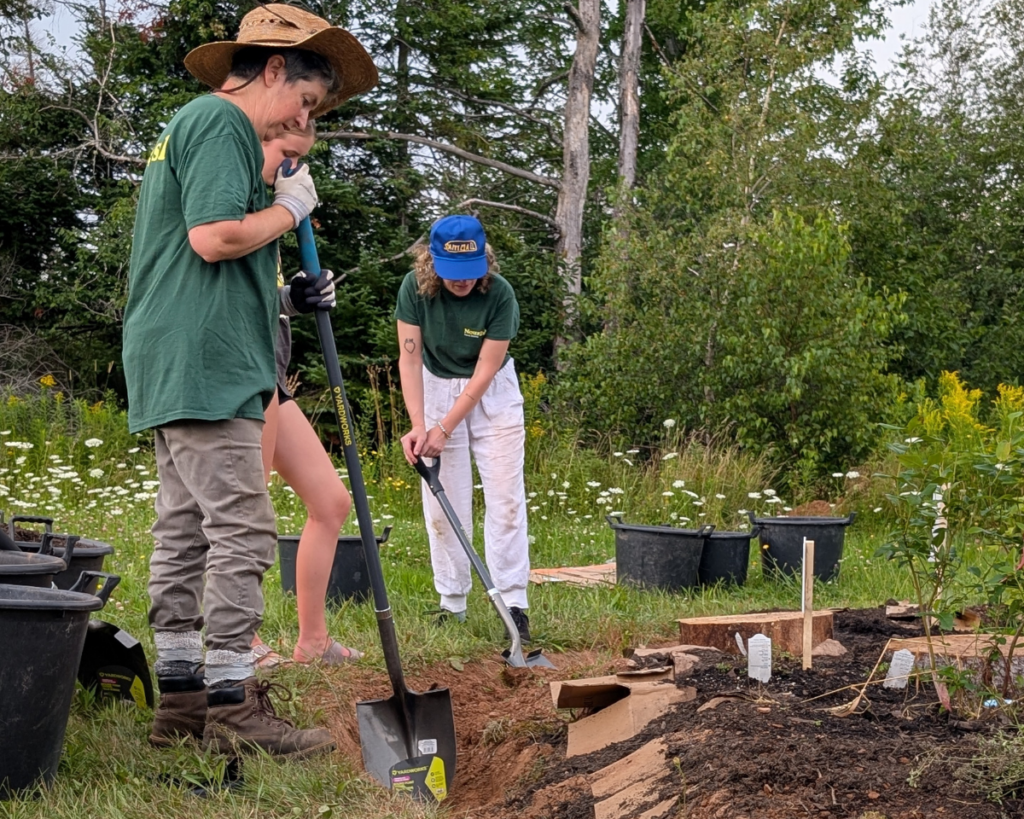
This was a unique opportunity to offer emergent youth programming while collaborating with organizations that were exploring and celebrating the meaning of local prosperity. It became a creative space to collectively exchange knowledge and demonstrate community resiliency in the face of current and future challenges, including climate change, for people of all ages.
Learn more about the co-conveners of the Local Prosperity Conference 2026 here: Centre for Local Prosperity, North Shore Community Connections Society and Rural Communities Foundation of Nova Scotia.
Our first workshop focused on Soil Care. We swiftly created a healthy foundation for a new garden space using the sheet mulching technique, also known as lasagna gardening — like building a giant soil-making sandwich with layers of cardboard and organic matter right on top of the grass, allowing us to compost in place! Afterward, the youth got to learn about microorganisms through our Creepy Crawlies art activity and science observation tools. We learned that viruses are a type of microorganism and, contrary to their reputation, aren’t all bad — some can actually help release nutrients into the soil for plants to use. There was a sweet, big “Wow!” reaction from the youth.


Our Habitat Creation and Biodiversity workshop was up next. We planted over thirty edible, medicinal, and pollinator plants, including low-lying herb ground covers, berry bushes, rhubarb, milkweed, an apple tree, and more! Youth learned about the layers of a food forest and how they’re inspired by the way nature grows in the wild. They also learned which plants are native to Mi’kma’ki through our handy infographic profile pages. Then colourful, creative sign-making got underway to label the more than fifteen different kinds of plants in this emerging natural learning lab. The youth tried out a selection of digging tools and learned transplanting techniques while we discussed ideas of stewardship.
This ecosystem is now part of the David Suzuki Foundation’s Butterflyway Project — read more about how you can get involved with this movement, which is growing habitat for our vital pollinators in neighbourhoods, parks, and schools throughout Canada!


Finally, after the garden was planted, we led a Water Care session focused on different elements of slowing, storing, and spreading water — essential techniques for gardening in increasingly drought-prone conditions. This included making a mulch basin on the high side of the garden and installing spigots in rain barrels so youth can learn to install barrels under gutters on school and community grounds to harvest rainwater.

The weather was quite extreme throughout the two days — from heat to thunderstorms to many, many mosquitos — but the youth and facilitators rallied to install a food forest from start to finish. It will be cared for by students at Tatamagouche Regional Academy, where the food forest guild was planted near their greenhouse and outdoor classroom. Due to rain, we were unable to hold our Moth Observation and Food Forest Celebration event after the three workshops concluded — but the rain from Mother Nature was its own kind of celebration, since plants going into the ground in August need lots and lots of water.
These living learning labs demonstrate resilience in a changing climate while giving youth the opportunity to steward soil, water, and biodiversity while learning to grow food. This new ecosystem joins a growing number of school and community food forests and pollinator gardens popping up across the province, including several in CCRCE: Northumberland Regional High School, Scotsburn Elementary, Central Colchester Junior High, and South Colchester Academy. May this apple tree guild thrive for many years to come, benefitting the school and broader community of people and pollinators!
Though this marks the end of Grow Eat Learn’s Garden Mentor’s chapter, their knowledge shared will live on in our programming and on our Learning Hub through countless resources such as the Apple Tree Guild: How-to Guide. If you’d like to learn about planting a fruit tree guild, check it out!
Stay tuned for more opportunities for youth to engage in climate action through gardening in future Grow Eat Learn offerings!

Written by Jess Ross, Raina McDonald, Bria Chiome-Miller, and Ruth Lapp